Could your next great hire be invisible?

Could your next great hire be invisible?

Discover why workplace inclusion is becoming a competitive business advantage and how disability inclusion, leadership and corporate partnerships create stronger organisations.

It is an uncomfortable question, yet one every business leader should consider as Australia’s workforce continues to evolve. While organisations invest heavily in attracting talent, many recruitment processes still reward familiarity over capability, unintentionally overlooking people who could bring fresh perspectives, resilience and innovation to their teams. The challenge is no longer finding people willing to contribute, but recognising talent that does not always follow traditional career pathways.

For many years, workplace inclusion was largely viewed through the lens of corporate social responsibility, sitting alongside community sponsorships, fundraising initiatives and annual awareness campaigns rather than influencing everyday business decisions. These initiatives reflected positive intentions, but they rarely reshaped recruitment practices, leadership development or organisational culture in meaningful ways. Disability inclusion often remained disconnected from broader workforce strategy, leaving countless capable people outside employment pathways despite possessing valuable skills, determination and ambition. Today, that mindset is beginning to change because organisations are recognising that inclusion is not simply about doing the right thing, but about building stronger businesses prepared for the future.

Across Australia, employers are facing challenges that cannot be solved by technology alone, regardless of how quickly automation and artificial intelligence continue advancing. Skills shortages remain widespread, employee engagement has become increasingly difficult to maintain and younger generations expect organisations to demonstrate purpose alongside commercial success. Customers, investors and employees are paying closer attention to how businesses create value beyond financial performance, encouraging leaders to think differently about culture, capability and long-term sustainability. In this environment, workplace inclusion has become far more than a social initiative because it strengthens organisational resilience while expanding access to talented people who have too often been overlooked.

The organisations most likely to succeed during the coming decade will not necessarily be those with the largest recruitment budgets or the most polished diversity statements displayed throughout annual reports. Instead, they will be organisations that understand how to recognise potential where others see barriers, build cultures where different perspectives are genuinely valued and create workplaces where contribution matters more than conformity. These businesses appreciate that innovation rarely emerges from teams where everyone shares identical experiences, making diversity of thought an increasingly valuable competitive advantage. Workplace inclusion therefore deserves a central place within business strategy because the future of work depends upon recognising human potential in all its forms.

The workforce has changed faster than many organisations

The modern workplace looks remarkably different from the one that existed only a decade ago because technology, changing expectations and new ways of working have transformed almost every industry. Hybrid work has become commonplace, career pathways have become less predictable and automation continues reshaping repetitive tasks while increasing demand for qualities that machines cannot replicate. Creativity, adaptability, empathy, collaboration and emotional intelligence have become highly valued capabilities because they help organisations respond confidently to constant change. Despite these shifts, many recruitment processes still favour candidates who fit familiar patterns instead of recognising people capable of strengthening the organisation in unexpected ways.

Traditional recruitment often rewards confidence within structured interviews, lengthy employment histories and narrowly defined experience, unintentionally excluding talented people whose abilities are demonstrated differently. Job descriptions continue expanding, selection criteria become increasingly prescriptive and success is frequently measured against conventional career journeys rather than genuine capability or potential. As a result, many organisations reduce the diversity of thinking that drives innovation without even realising it. Every capable person overlooked because they did not match an existing template represents a missed opportunity for both the individual and the organisation.

For many people with disability, the greatest challenge is rarely their ability to perform meaningful work because capability has never been the issue. The challenge is gaining an opportunity to demonstrate those strengths within recruitment systems that often prioritise familiarity over potential. When organisations ask whether someone fits the existing system, they risk overlooking individuals who could improve that system through different experiences, perspectives and approaches to solving problems. The more valuable question is whether recruitment processes are flexible enough to recognise different forms of talent instead of rewarding only those who present in expected ways.

Creating workplaces that recognise potential before assumptions requires leadership rather than compliance because meaningful inclusion cannot be achieved through policies alone. Leaders must be willing to challenge recruitment practices that no longer reflect the realities of today’s workforce while remaining genuinely curious about people whose experiences differ from their own. Organisations that consistently ask better questions about capability inevitably discover better answers about talent, innovation and long-term success. That shift from conformity towards curiosity represents one of the most important leadership opportunities facing Australian businesses today.

Workplace inclusion expands talent instead of lowering standards

One of the most common misconceptions surrounding disability employment is that organisations must somehow compromise performance expectations in order to become more inclusive. This belief continues discouraging many employers despite growing evidence demonstrating that diverse teams consistently outperform more homogeneous groups across innovation, collaboration and problem-solving. Inclusive organisations do not lower standards because excellence remains essential to business success regardless of who joins the team. What changes is their understanding of where talent exists and how people can best demonstrate their capabilities.

Every successful organisation already benefits from people who think differently because varied perspectives strengthen decision-making and encourage more creative approaches to solving complex challenges. Analytical thinkers complement creative innovators, experienced professionals strengthen emerging talent and individuals with different life experiences challenge assumptions that might otherwise remain unquestioned. Disability represents another important dimension of that diversity because many people develop remarkable resilience, persistence and adaptability while navigating environments that were never originally designed with their needs in mind. Those experiences frequently become valuable workplace strengths rather than limitations.

Many people with disability also bring exceptional attention to detail, reliability, empathy, practical problem-solving and determination that cannot always be identified through conventional interviews or rigid recruitment processes. These qualities become visible when organisations create opportunities for candidates to demonstrate capability through practical experiences, workplace trials or meaningful conversations rather than relying exclusively upon formal interviews. The discussion therefore moves away from accommodation and towards contribution because organisations begin recognising strengths before focusing upon perceived challenges. That simple change reshapes relationships, strengthens workplace culture and allows businesses to access talented people who might otherwise remain overlooked.

Workplace inclusion is therefore not about filling quotas or meeting external expectations because those approaches rarely create lasting cultural change. It is about expanding an organisation’s understanding of talent while creating environments where more people have the opportunity to contribute according to their strengths. Businesses that embrace this mindset are not simply becoming more inclusive because they are building more adaptable, innovative and resilient organisations prepared for the future. That represents a competitive advantage every organisation should be actively pursuing.

Corporate partnerships create opportunities that benefit everyone

The most successful corporate partnerships achieve far more than meeting sponsorship objectives or demonstrating community involvement because they create lasting relationships that strengthen businesses, individuals and local communities simultaneously. When organisations partner with Compass Institute, they become active participants in developing confidence, workplace skills and meaningful opportunities for people with disability rather than simply providing financial support. These partnerships introduce businesses to talented individuals who may never have entered traditional recruitment pathways while giving trainees valuable real-world experiences that build confidence and independence. Everyone involved benefits because meaningful inclusion is created through participation rather than observation.

Many business leaders are surprised by the positive impact these partnerships have on their own teams because genuine relationships often change perspectives far more effectively than policies or training sessions ever could. Employees who mentor trainees regularly develop stronger communication skills, greater empathy and a deeper appreciation for the different ways people learn, solve problems and contribute within the workplace. Teams become more collaborative because assumptions are gradually replaced with understanding, creating an organisational culture where diversity is valued as a practical business strength rather than simply an aspirational goal. The experience ultimately reminds organisations that great workplaces are built by recognising people’s abilities before focusing on perceived limitations.

Compass Institute views businesses as long-term partners in creating opportunity because sustainable inclusion depends upon collaboration rather than isolated initiatives. Trainees gain practical workplace experience, organisations broaden their talent pipeline and communities benefit from stronger connections between education, employment and participation. Families, educators, mentors and employers all become part of the same ecosystem, working together to create pathways that support long-term independence and meaningful contribution. These partnerships demonstrate that creating opportunity is not simply good for individuals because it strengthens organisations and communities alike.

Organisational culture is built through everyday leadership

Many organisations invest considerable time developing inclusion strategies, yet workplace culture is rarely defined by documents, policies or statements displayed on websites. Culture is shaped by the everyday decisions leaders make, the behaviours teams consistently demonstrate and the experiences employees have every time they come to work. People notice who receives opportunities, whose ideas are encouraged and whether different perspectives are genuinely welcomed during important conversations. These daily interactions determine whether workplace inclusion becomes part of an organisation’s identity or remains an unfulfilled ambition.

Creating an inclusive culture cannot become the sole responsibility of human resources because every leader influences the experience of the people around them. Managers create opportunity by recognising strengths, encouraging development and ensuring people have meaningful opportunities to contribute according to their abilities rather than preconceived expectations. Colleagues strengthen workplace culture by remaining curious, respectful and willing to learn from perspectives different from their own instead of relying upon assumptions. Small decisions repeated consistently over time have a far greater influence on organisational culture than occasional awareness campaigns or one-off initiatives.

Sometimes meaningful inclusion begins with something as simple as redesigning an interview process, introducing workplace mentoring or allowing candidates to demonstrate practical skills instead of relying exclusively upon formal interviews. Other organisations discover that flexibility, thoughtful communication and strengths-based leadership enable more people to perform at their highest potential while maintaining consistently high expectations. These improvements rarely require dramatic organisational change because they are simply better ways of recognising talent that already exists. Over time, these everyday decisions shape workplaces where more people feel confident contributing their ideas, skills and experience.

What if every workplace looked beyond the CV?

What if every employer chose to look beyond traditional recruitment pathways and recognised people for their strengths before considering their circumstances or perceived limitations? What if graduates with disability entered workplaces where conversations focused first upon capability, ambition and contribution instead of assumptions about what they might need? What if businesses measured success not only through financial performance but also through the opportunities they created for people, families and communities to grow together? Those questions challenge us to imagine a future where workplace inclusion becomes an ordinary part of doing business rather than an exceptional achievement.

This vision sits at the heart of Compass Institute’s philosophy because genuine inclusion begins by recognising the strengths, aspirations and potential every person already possesses. Our Asset-Based approach starts with what people can do before considering the support they may require, ensuring dignity, independence and opportunity remain central to every relationship. Rather than asking individuals to fit systems that were never designed for them, we encourage organisations to build environments flexible enough to recognise different ways of learning, communicating and contributing. When businesses embrace this mindset, they discover inclusion creates stronger organisations because it unlocks potential that may otherwise remain unseen.

Leadership that leaves a legacy

Every generation of business leaders is remembered for the decisions that shape organisations long after financial results have been forgotten. Some leaders become recognised for innovation, others for growth and many for navigating significant periods of change with resilience and vision. The next generation may well be remembered for expanding our understanding of who belongs within the workforce and ensuring opportunity becomes available to people whose potential has too often been overlooked. That legacy extends far beyond business because it influences communities, families and future generations.

The organisations that embrace workplace inclusion today are preparing themselves for a future where adaptability, collaboration and human potential become defining competitive advantages. They understand that stronger cultures create stronger businesses and that recognising diverse talent leads to better innovation, improved decision-making and greater organisational resilience. Compass Institute believes inclusion is not something organisations do for people with disability but something they build with people, creating environments where everyone has the opportunity to contribute, develop meaningful skills and belong. When businesses choose to see possibility before limitation, they do far more than strengthen their workforce because they help create communities where everyone has the opportunity to thrive.

Key takeaways

  • Workplace inclusion has evolved from a corporate social responsibility initiative into a genuine business advantage.
  • Inclusive organisations strengthen performance by expanding their understanding of talent rather than lowering expectations.
  • Corporate partnerships create meaningful opportunities for businesses, trainees and communities to grow together.
  • Everyday leadership decisions have a greater influence on workplace culture than policies alone.
  • Organisations that recognise human potential will be better prepared for the future of work.

Frequently Asked Questions

Why is workplace inclusion important for businesses?

Workplace inclusion helps organisations attract broader talent, strengthen organisational culture, improve employee engagement and encourage innovation by bringing together diverse perspectives and experiences. Businesses that value inclusion are also better positioned to attract customers, employees and partners who increasingly expect organisations to demonstrate purpose alongside commercial success.

How can businesses support disability inclusion?

Businesses can strengthen disability inclusion by reviewing recruitment practices, recognising strengths before assumptions, providing meaningful workplace experiences and creating cultures where people have genuine opportunities to contribute according to their abilities. Inclusion is most successful when it becomes part of everyday leadership rather than a standalone initiative.

What role do corporate partnerships play in disability inclusion?

Corporate partnerships create valuable opportunities for workplace learning, mentoring, employment pathways and community participation while helping businesses broaden their talent pipeline and strengthen organisational culture. These relationships deliver lasting value because they create opportunities for shared learning, collaboration and meaningful contribution.

How does Compass Institute work with businesses?

Compass Institute partners with organisations that want to create genuine opportunities for people with disability through practical workplace experiences, strengths-based learning and long-term community partnerships. Together, these collaborations help build stronger organisations while creating communities where everyone has the opportunity to contribute, belong and thrive.

Closing thoughts

The future of business will belong to organisations that understand people as well as they understand markets because long-term success depends upon recognising human potential in all its forms. Workplace inclusion is no longer simply about meeting expectations or improving public perception because it has become a practical strategy for building stronger teams, healthier cultures and more resilient organisations. Every business has an opportunity to create environments where different perspectives are welcomed, individual strengths are recognised and meaningful contribution becomes part of everyday work. At Compass Institute, we believe the most powerful question any leader can ask is, “What if every person was given the opportunity to contribute their strengths?” because the answer has the potential to transform workplaces, communities and lives.

Compass Charity Golf Day 2026

TEAM OF FOUR
Bring your best four.

18 HOLES
Scenic course.
Great day out.

BREAKFAST + LUNCH
Brekky burger, coffee and two-course lunch.

HOLE-IN-ONE CAR
Drive away with a prize you’ll love.

MORE THAN A GAME

A great day of golf.

A real impact.

Every team and sponsor helps Compass create opportunities for people with disability to work, learn, connect and live with greater independence.

Your support builds a more inclusive Sunshine Coast – on and off the course.

CHOOSE HOW YOU’LL TAKE PART

Two ways to get involved

Enter a team

$1,650

Give four people a brilliant day out while backing a more inclusive community.

  • Team of four
  • 18-holes of golf
  • Win big with exclusive auction and raffle prizes
  • Hear from inspiring guest speakers
  • World class golf course
  • Standout Sunshine Coast charity event
  • Play, Connect and Give back
  • Brekky burger and coffee
  • On-course drinks
  • Two-course lunch

Sponsor a hole

$2,000

Put your business at the centre of the day and create a visable connection with local impact.

  • Team of four players
  • 18 holes with cart
  • Brekky Burger and Coffee
  • On-course drinks
  • 2-Course Lunch for four
  • Stand-up banner in the function room PLUS digital signage in all Golf Carts
  • Opportunity to host an on-hole activation with prize you supply
  • Opportunity to provide a promotional item for each player
  • Your logo featured in all media and collateral
  • Social Media shout-outs across all Compass Institute pages and all our 4,500 strong community

Ace the hole.
Drive home in a new car.

Land a hole-in-one on the nominated hole and the prize could be yours.

Blue text logo that reads AUTOPACT Foundation with AUTOPACT in bold uppercase letters and Foundation in italicised font underneath.

Your in good company

Join these outstanding local businesses in supporting Compass and our community.

The image shows the logo for AIB Australia, with large bold letters AIB above the word Australia in smaller text.
A blue rectangular logo featuring the lowercase letters ncp in white, with three overlapping white circles above the letters. A white rectangular outline partially frames the text.
A graphic of a white and green tipper lorry unloading rocks, with text: Get Your Rocks Off... COASTAL LANDSCAPE SUPPLIES. The word LANDSCAPE is highlighted in green.
A black circle outlined in purple contains the word ENTAG™ in bold, white capital letters centred on a black background.
Sumup logo

Ready to make your round count?

Tell us whether you’re interested in a team, sponsorship or both. We’ll make the next step easy.

(07) 5445 9116 

[email protected]

    What if…

    you could be the difference?

    Catering Enquiry Form

      Catering Enquiry

      Build Your Catering Enquiry

      Tell us about your event and select the catering items you are interested in. Our Connections Café team will review your enquiry, confirm availability and provide you with a final quote.

      Step 1

      Your Details

      Event Details

      When and Where?

      Step 2

      Select Your Catering

      Select a menu category, then choose the items and quantities you would like included in your enquiry.

      Wraps

      $12.00 each. Variations may be available on request.

      Chicken Caesar

      Mixed greens, chicken, bacon, egg, parmesan cheese and Caesar dressing.

      Chicken and Avocado

      Mixed greens, avocado, fresh baked chicken and mayonnaise.

      Veggie Delight

      Mixed greens, roasted seasonal vegetables, tomato relish and Swiss cheese.

      Roast Beef

      Mixed greens, roast beef, caramelised onion and tasty cheese.

      Ham

      Mixed greens, leg ham, seeded mustard, tomato and tasty cheese.

      Egg and Lettuce

      Mixed greens, fresh seasoned mashed egg and mayonnaise.

      Salad

      Mixed greens, carrot, Spanish onion, tomato, cucumber, capsicum, mayonnaise and tasty cheese.

      Step 3

      Dietary Requirements

      Tell us about any dietary requirements or allergies that may affect your catering.

      Important: Please provide complete allergy information. Our team will contact you to discuss preparation and suitability before confirming your order.
      Step 4

      Final Details

      Corporate Catering

      Optimus Autopact

      Cricks

      Caloundra Mazda

      Four people stand outside on grass under a bright blue sky, each in playful poses holding golf clubs. Trees and a wooden structure are visible in the background. The mood is cheerful and energetic.

      Compass Charity Golf Day

      Dan Hunt was introduced to Compass CEO David Dangerfield through a mutual connection associated with the Compass Charity Golf Day. After learning about David’s vision for young people with disability, Dan’s dealership sponsored a hole at the event.

      It was a relatively small beginning, but Dan immediately recognised that Compass was doing something different.

      He saw a team and an organisation that was genuinely keen to develop and maintain mutual benefit partnerships across their community…. partnerships that genuinely added value to the various businesses.

      And he saw an organisation truly focused on creating meaningful opportunities for young people with disability to learn, work, contribute and be recognised for their individual abilities.

      The following year, David invited Dan, Matt and their team to become the major sponsor of the golf day. They agreed without hesitation and a genuine partnership began.

      Brightly painted Connections Café Nambour features a large butterfly mural, blue sign, accessible ramp, and outdoor seating; set against trees and a blue sky with scattered clouds.

      Turning conversations into opportunities

      As Dan and David came to know each other, their conversations moved beyond sponsorship.

      David shared his plans to create more real-world training environments where Compass trainees could develop practical skills, build confidence and connect with the wider community.

      During one of those conversations, David mentioned his ambition to establish a café in Nambour. Dan took the idea to Garry Crick and they realised that a former service station site beside the dealership could provide the location.

      That conversation led to the opening of Compass Connections Café in 2016.

      Rather than learning hospitality skills in an artificial training environment, Compass trainees were able to work in a real café, serve customers and become part of the everyday life of the neighbouring business.

      The dealership team removed the coffee machine from its showroom, gave staff coffee vouchers and encouraged them to buy their coffee from the Compass café. Customers met the trainees, staff formed genuine relationships with them and inclusion became something people experienced naturally.

      The café went on to provide meaningful vocational opportunities for more than 50 young people with disability.

      A smiling man in a blue polo shirt and apron stands behind a counter in a café kitchen, holding out a cupcake on a small plate. A "What If" poster about Disability Services hangs on the wall behind him, adding warmth to the welcoming space.

      A partnership built on mutual respect

      What made the relationship work was that it never became a one-way arrangement.

      Dan and his team wanted to help Compass succeed, but David was equally interested in understanding the dealership and finding ways Compass could contribute to its business.

      Over the years, that collaborative approach created new opportunities, from trainee work placements and accessible transport to Compass-made hampers presented to vehicle buyers. A second Compass Café was later established inside the Caloundra dealership, creating another real-world environment where trainees could gain hospitality experience and connect with customers.

      For Dan, the impact extended beyond any single project. Getting to know the trainees brought the partnership to life for dealership staff and gave the business an even stronger connection to its community.

      For David, Dan became more than a corporate supporter. He became a trusted partner who understood the vision and was prepared to help turn ideas into action.

      Regular conversations became new initiatives, professional respect became friendship, and a sponsorship became a relationship that continued to grow.

      Video Thumbnail

      The next chapter: Caloundra Mazda and What If

      Today, Dan is Dealer Principal of Caloundra Mazda, and the partnership continues through Compass’s What If campaign. What If is built on the belief that inclusion should not be treated as a special initiative. It can be part of everyday community life, visible in our workplaces, businesses and the choices we make as customers.

      Caloundra Mazda is helping put that belief into practice.

      By standing alongside Compass, the dealership is helping create greater awareness, stronger community connections and meaningful opportunities for people with disability to participate and contribute. It is the latest chapter in a story that began with one conversation, grew through trust and continues because two local leaders share a belief in what business can achieve when community is placed at its heart.

      Together, we are community

      When you choose to support a business that supports inclusion,
      your decision can travel much further than you realise.

      When you make it Mazda, make it Caloundra Mazda.

      Whites IGA

      Roz-and-Michael-White-at-the-opening-of-thei-sixth-store-Whites-IGA-Forest-Glen

      Walk into a White’s IGA and you will see more than shelves and checkouts.

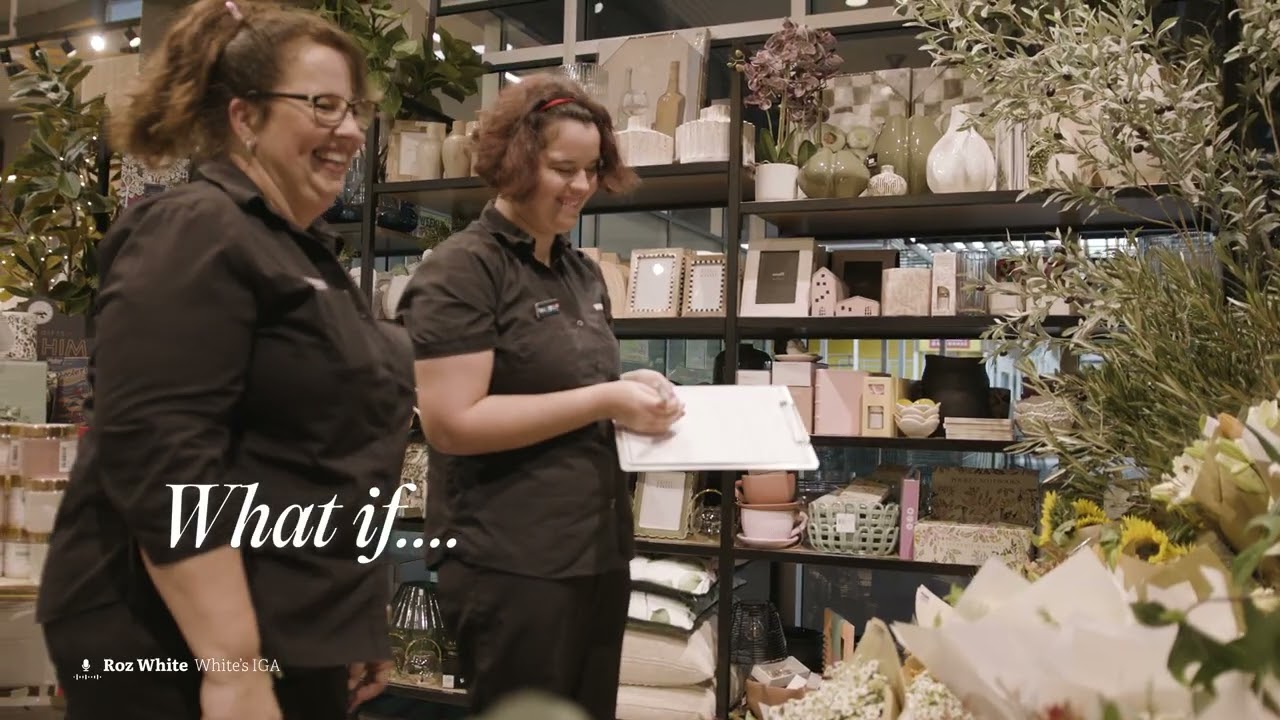
      You will see neighbours stopping for a chat, team members greeting regulars by name, and people of varied ages and abilities working side by side. For Roz White, that is what “a place for everyone” looks like. It means people are not only welcomed at the door. They are acknowledged, valued, respected and included, whether they are customers, team members, suppliers or community members of every age and ability. For more than three decades, White’s IGA has employed people from all walks of life, and its teams reflect their communities.

      Video Thumbnail

      Roz says her commitment to inclusion grew through early partnerships with organisations including The Compass Institute, along with volunteer work for a Queensland charity supporting people with disability. One team member captures that belief. He joined White’s IGA at 15 and is now in his late 20s.

      Roz has watched him grow from a shy young person into a confident man who takes pride in his presentation, greets people with a broad smile and works alongside his colleagues as a valued team member.

      “That is what belonging looks like,” she says. White’s IGA chose to partner with Compass because both organisations believe in creating practical opportunities for people with disability to learn, grow and participate more fully in community life, not by doing things for people, but by providing the support, experience and space for people to discover what they are capable of, contribute in ways that matter to them and build confidence that carries into everyday life.

      “A place for everyone is a place where people are genuinely welcomed, valued for who they are, and respected for their differences and individuality.”

      Roz believes local businesses can make inclusion visible in everyday places, creating practical, local opportunities connected to real life while challenging assumptions, building understanding, strengthening team pride and showing the wider community that everyone has something valuable to contribute. Her hope is that Compass Trainees gain confidence, skills, purpose and pride, while other Sunshine Coast businesses feel encouraged to create opportunities of their own.

      What if…

      you could be the difference?

      Runaway Noosa Marathon 2027

      Run the Noosa Runaway Marathon

      Every kilometre can help create opportunities.

      The 2027 Noosa Runaway Marathon is more than a running event. It’s an opportunity to challenge yourself while helping create opportunities for people with a disability across our community.

      Compass is proud to be an official charity partner for the 2027 Noosa Runaway Marathon, and we’d love you to join Team Compass by choosing us as your charity when you register.

      Whether you’re tackling the marathon, half marathon, 10km or 5km, your fundraising can have a lasting impact.

      Why run for Compass?

      Every day at Compass, people with a disability are discovering new skills, building confidence, making friendships and contributing to their communities in meaningful ways.

      From welcoming customers in our cafés and creating handcrafted products, to learning practical skills on our farm, preparing for employment and exploring their communities, every opportunity helps build greater independence and confidence.

      Your fundraising helps us continue creating the places, resources and opportunities that make this possible.

      Your run can make a real difference

      When you ask family, friends and colleagues to support your run, you’re inviting them to be part of something bigger than race day.

      The funds you raise help Compass continue providing the environments where people can:

      • Build confidence through real-world experiences.
      • Learn practical and workplace skills.
      • Develop friendships and social connections.
      • Explore their interests and discover new strengths.
      • Participate in their community with confidence.
      • Create pathways towards greater independence and employment.

      Every donation helps create more opportunities for people to learn, grow and contribute.

      COMPASS-trainee-document-shredding-workspace-image

      Fundraising is easier than you think

      Once you’ve registered for the Noosa Runaway Marathon and selected Compass as your charity, you’ll receive your own online fundraising page.

      Then simply:

      • Share your story
        Tell people why you’ve decided to run for Compass.
      • Invite your community
        Ask friends, family and workmates to support your challenge.
      • Train with purpose
        Every training run becomes another reminder that you’re helping create opportunities for others.

      We’ll also provide fundraising ideas, social media graphics and resources to help you reach your goal.

      Michael-watering

      Why people choose Team Compass

      People don’t join Team Compass because they have to.

      They join because they believe everyone deserves the opportunity to discover their strengths, contribute to their community and feel a genuine sense of belonging.

      When you run for Compass, you’re not just completing a personal challenge.

      You’re helping create a community where opportunity is available to more people.

      What if…

      you could be the difference?

      Why Disability Inclusion Starts With Seeing Strength Before Support

      Why Disability Inclusion Starts With Seeing Strength Before Support

      Discover why disability inclusion starts with recognising strengths before support needs, and how an asset-based approach builds independence, belonging and stronger communities.

      For decades, conversations about disability have begun with a list of needs. Assessments identify what support a person requires, reports document barriers, and systems are built to respond to deficits. While support is essential, something important can be lost when need becomes the first and only lens through which a person is viewed.

      The question changes everything.

      Instead of asking, What does this person need?, what happens if we begin by asking, What strengths do they already bring?

      It is a simple shift in language, yet it has the power to transform lives, workplaces and entire communities. When people are recognised for their abilities before their limitations, expectations change. Relationships become more equal. Opportunities emerge that might otherwise have remained hidden.

      This is not wishful thinking or optimistic rhetoric. It reflects a growing understanding that genuine inclusion is not achieved by creating more services. It is achieved by creating environments where people are seen as contributors first. That philosophy sits at the heart of the Asset-Based Model embraced by Compass Institute, where every trainee is recognised for the gifts they bring through their knowledge, practical skills and character rather than being defined by a diagnosis.

      Looking Beyond the Deficit

      Modern disability services have evolved considerably over recent decades, and many have improved choice and individual control. Yet many systems still begin with assessment frameworks designed to identify what is missing. Funding models naturally require evidence of need, but this administrative necessity can unintentionally shape the way society thinks about people.

      When someone is introduced through a list of limitations, those limitations often become their identity in the eyes of others. Teachers lower expectations. Employers become hesitant. Community members assume support will always outweigh contribution.

      None of this is deliberate, but the cumulative effect is profound.

      Young adults leaving school often experience this most acutely. Throughout their education they have routines, friendships and a sense of belonging. Graduation can bring an abrupt end to that structure. Families find themselves searching for meaningful opportunities that extend beyond supervision or passive day programmes. They want places where their sons and daughters continue to grow, build confidence and discover purpose.

      Compass Institute recognises that this transition is not simply about filling time. It is about creating pathways into adulthood that encourage independence, capability and genuine participation in community life. Rather than asking trainees to fit into predetermined programmes, the focus begins with discovering individual interests, talents and aspirations before building opportunities around them.

      That distinction may appear subtle, but it fundamentally changes the experience of everyone involved.

      The Difference Between Support and Opportunity

      Support is important. Few would argue otherwise. The challenge is that support alone does not automatically create belonging.

      Belonging comes from contributing.

      Every person wants to know that their presence matters, that their skills are useful and that their efforts make a difference to those around them. These are deeply human needs that extend well beyond disability.

      An asset-based approach recognises this reality. Rather than viewing support as the destination, it views support as the bridge that enables participation.

      Consider someone who has an exceptional eye for detail, enjoys routine and takes pride in producing high-quality work. Traditional systems may focus first on the adjustments required for employment. An asset-based approach begins somewhere entirely different. It identifies those natural strengths and asks where they could flourish.

      The conversation shifts from accommodation to opportunity.

      Instead of asking whether someone is ready to contribute, organisations begin asking how they can create environments where those contributions are recognised.

      This mindset does not ignore challenges. It simply refuses to let challenges become the defining feature of a person’s identity.

      The result is often greater confidence, stronger relationships and a more authentic sense of independence because people experience themselves as active participants in their own lives rather than passive recipients of support.

      Communities Flourish When Everyone Has Something to Give

      Inclusion is often discussed as though it benefits only people with disability. In reality, inclusive communities become stronger for everyone.

      When local businesses open their doors to trainees, they gain committed team members with unique perspectives. When community organisations welcome diverse participation, they become richer in experience and understanding. When schools build stronger transition partnerships, young people move into adulthood with greater confidence rather than uncertainty.

      Inclusion is therefore not an act of generosity. It is an investment in stronger communities.

      This understanding has become increasingly important as Australia faces workforce shortages across multiple industries. Employers are searching for reliable, motivated people while many capable individuals remain overlooked because traditional recruitment processes continue to prioritise conformity over potential.

      The opportunity is significant.

      Many employers who have embraced inclusive hiring speak not only about social impact but also about improvements in workplace culture, staff retention and team cohesion. Employees become more aware of one another’s strengths. Managers develop greater adaptability. Teams learn to communicate more effectively because diversity encourages flexibility rather than assumption.

      What begins as an employment initiative often becomes a cultural transformation.

      That is why disability inclusion should never be confined to corporate social responsibility. It belongs within conversations about leadership, innovation and organisational capability.

      Seeing Capability in Everyday Practice

      At Compass Institute, capability is not treated as an abstract concept. It is experienced through everyday participation.

      A trainee working alongside a mentor in a workshop is learning far more than technical skills. They are developing confidence through repetition, discovering the satisfaction that comes from producing quality work and experiencing the trust that grows when responsibility is shared.

      Another trainee participating in a community project may begin by learning practical skills, but they also develop friendships, confidence in unfamiliar environments and a stronger sense of identity beyond disability.

      These experiences matter because they reflect ordinary adulthood.

      Real inclusion is found in shared workplaces, local cafés, community gardens, creative studios, sporting clubs and neighbourhood events. It happens when people become known for their interests, personalities and contributions instead of their support needs.

      Compass Institute deliberately builds these experiences by creating an ecosystem that connects trainees with families, educators, mentors, corporate partners and community organisations. Each relationship strengthens another, creating opportunities that extend far beyond any single programme. Rather than functioning solely as a service provider, Compass becomes a place where people discover who they are and how they can contribute to the communities around them.

      Changing Culture Begins With Changing the Questions

      Cultural change rarely begins with sweeping reforms.

      More often, it starts with a different conversation.

      Imagine if every employer asked, “What strengths could this person bring to our team?”

      Imagine if every school asked, “How do we prepare students for meaningful participation rather than simply graduation?”

      Imagine if every community organisation asked, “Whose voice is missing from this conversation?”

      These questions create possibilities because they encourage curiosity instead of assumption.

      The “What If” movement championed by Compass Institute invites precisely this kind of reflection. It asks communities to imagine inclusion not as a specialist initiative but as the normal way of doing life together. When that happens, disability becomes one aspect of a person’s identity rather than the characteristic that defines every opportunity available to them.

      This is how cultures change.

      Not through slogans or awareness campaigns alone, but through thousands of everyday decisions that recognise capability before limitation.

      A Future Built on Human Potential

      Australia has made significant progress in recognising the rights of people with disability, yet the next chapter requires something deeper than policy reform. It calls for a cultural shift in how society understands human potential.

      Every individual possesses gifts that deserve recognition. Some are obvious. Others emerge only when someone takes the time to look beyond first impressions.

      Communities that embrace this perspective become places where contribution is expected rather than exceptional. Employers gain dedicated colleagues. Families discover renewed confidence about the future. Young adults find opportunities to build meaningful lives defined by purpose, relationships and participation.

      Most importantly, people begin to see themselves differently.

      They are no longer introduced by what they require.

      They become known for what they bring.

      That may be the most powerful form of inclusion we can create. 

      Key Takeaways

      • Disability inclusion becomes more meaningful when we recognise strengths before support needs.
      • The Asset-Based Model encourages participation by focusing on capability, contribution and growth.
      • Inclusive workplaces and communities benefit everyone, not only people with disability.
      • Real belonging develops through genuine opportunities to contribute alongside others.
      • Small changes in the questions we ask can lead to lasting cultural transformation.

      Frequently Asked Questions

      What is an Asset-Based Model in disability support?

      An Asset-Based Model begins by identifying a person’s existing strengths, interests and capabilities before considering the supports they require. Rather than defining individuals by their challenges, it creates opportunities that build confidence, independence and meaningful participation in community life.

      Why is disability inclusion important for communities?

      Inclusive communities benefit from broader perspectives, stronger relationships and greater social participation. When people with disability are recognised as active contributors, communities become more connected, resilient and reflective of the diversity that already exists within them.

      How can employers improve disability inclusion?

      Employers can start by focusing on skills and potential rather than assumptions. Reviewing recruitment practices, creating supportive workplace cultures and recognising individual strengths often leads to better outcomes for both employees and organisations.

      How does Compass Institute approach inclusion differently?

      Compass Institute applies an Asset-Based philosophy that focuses on discovering each trainee’s gifts of the head, hand and heart. Learning, community participation and real-world experiences are designed to build independence while creating opportunities for meaningful contribution across the wider community.

      Closing Thoughts

      True inclusion begins long before someone enters a workplace, a classroom or a community programme. It begins with the way we choose to see one another. When we recognise potential before limitation, relationships change. Expectations rise. Opportunities become possible that once seemed out of reach.

      Compass Institute believes every person has something valuable to contribute. By creating environments where those contributions can be discovered, developed and celebrated, we move beyond simply supporting people to helping build communities where everyone belongs because everyone has something meaningful to offer. That is the future worth working towards, one conversation, one opportunity and one person at a time.